
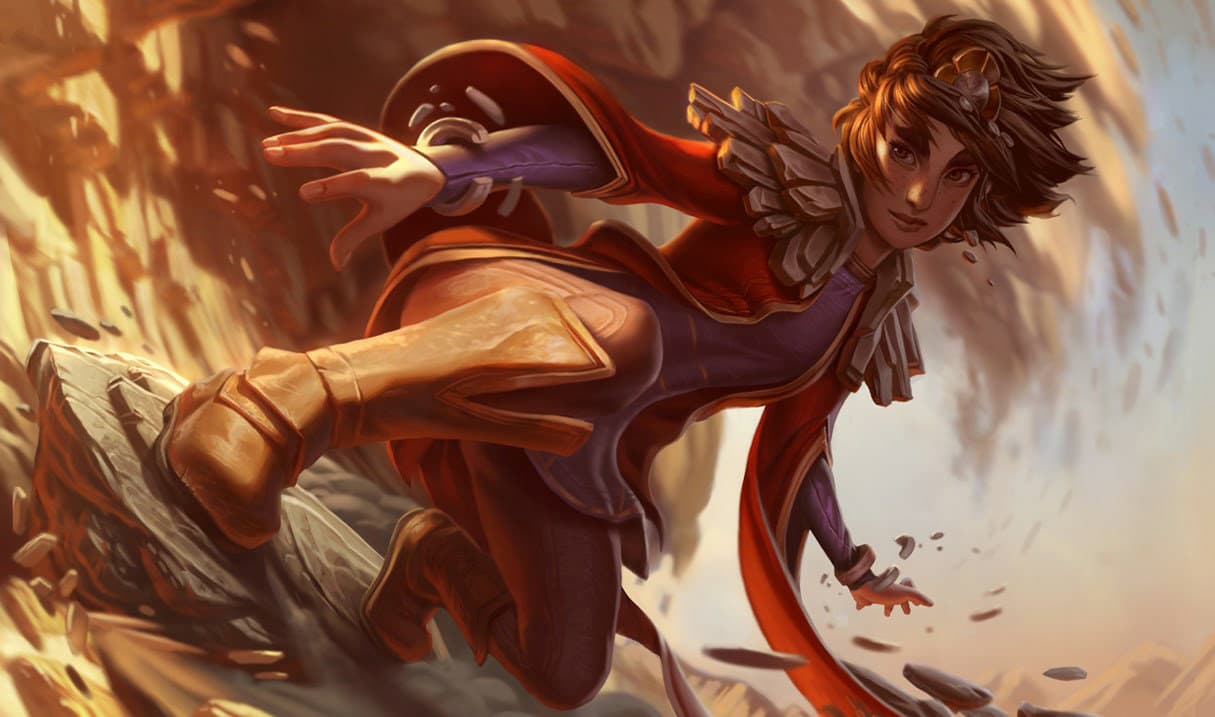

Guide · the Stoneweaver
Taliyah
A practical Taliyah playbook using Riot kit references and MacroDiff interpretation. Check the role, review date and patch context below.
MACRODIFF PLAYBOOK
How to think about Taliyah
Strengths, limits and power windows before you copy a build.
Strength profile
Protection and reset
Peel 3/3 measures how well the classified kit can protect space around an ally after contact begins.
Scaling value
Scaling 3/3 indicates how much the kit classification values longer fights, levels or completed items. It is not a guaranteed late-game win rate.
Control chain
Crowd-control signal 3/3 makes timing with allied setup or follow-up especially valuable. Avoid overlapping the same control window without a reason.
Watch-outs
Prefer follow-up to forced entry
Engage is 0/3. When the team lacks a clean opening, let another source create contact and use Threaded Volley on the confirmed window.
Do not borrow a frontline job
Frontline is 1/3. If allied durability is low, solve positioning and target access before volunteering to absorb the first contact.
Execution tax
Taliyah is marked moderate by the current difficulty band. Missing the primary pattern can change the entire next decision, so practice the reset as well as the hit.
Power windows
Levels 1–2
Establish Threaded Volley
The max-order reference is Q → E → W, not necessarily the opening skill order. Check the actual ability learned, range and resource cost before trading.
Early skill points
Check the learned abilities
Do not assume all three basic abilities have been learned. Check the actual skill allocation and each tool's conditions before practicing an entry, follow-up or disengage.
R availability
Weaver's Wall changes the decision tree
Riot's current description: Taliyah creates a very long wall and then surfs it. Decide whether the cast creates access, protection, damage or an exit before using it.
Completed core
Re-check the team job
After the core build comes online, compare engage 0/3, peel 3/3, scaling 3/3 and frontline 1/3 again. Items can change priority without changing champion identity.
ROLE PLAN
Lane and tempo checklist
Tie spells to wave control
Threaded Volley is the first-max pattern in the current build snapshot. Use it with a clear purpose: pressure the opponent, secure the wave, or preserve priority—not all three at once. Riot's description: Taliyah throws a volley of rocks in a target direction, moving freely as she casts. This creates Worked Ground below her. If Taliyah casts Threaded Volley on Worked Ground, she…
Move on a finished wave
Roam or place deep vision after the wave is handled. Leaving a bad wave can turn a successful move into lost experience and a weaker return timing.
Hold the central angle
Your mid-lane job changes with engage 0/3 and peel 3/3. Start only when the kit supports it; otherwise keep the route between your carry and the threat. When Weaver's Wall is available, read its actual purpose before committing; not every R is an engage or escape.
5V5 PLAN
Team-fight responsibilities
Let contact become visible
Engage 0/3 favors a follow-up posture. Keep Threaded Volley available until the first threat and target are clear.
Protect the second line
Peel 3/3 makes the space around the carry a valid win condition. Do not spend every control tool on the first visible tank.
Re-evaluate after the first cooldowns
The first exchange changes health, spacing and available tools. Pause long enough to choose between continuing, peeling back or changing target; do not replay the opening automatically.
COMMUNITY LAYER
Taliyah guides
Long-form decisions from MacroDiff editorial and community authors.
No reviewed analysis is available for this scope yet.
The champion hub is ready; the first reviewed Taliyah community guide will appear here.